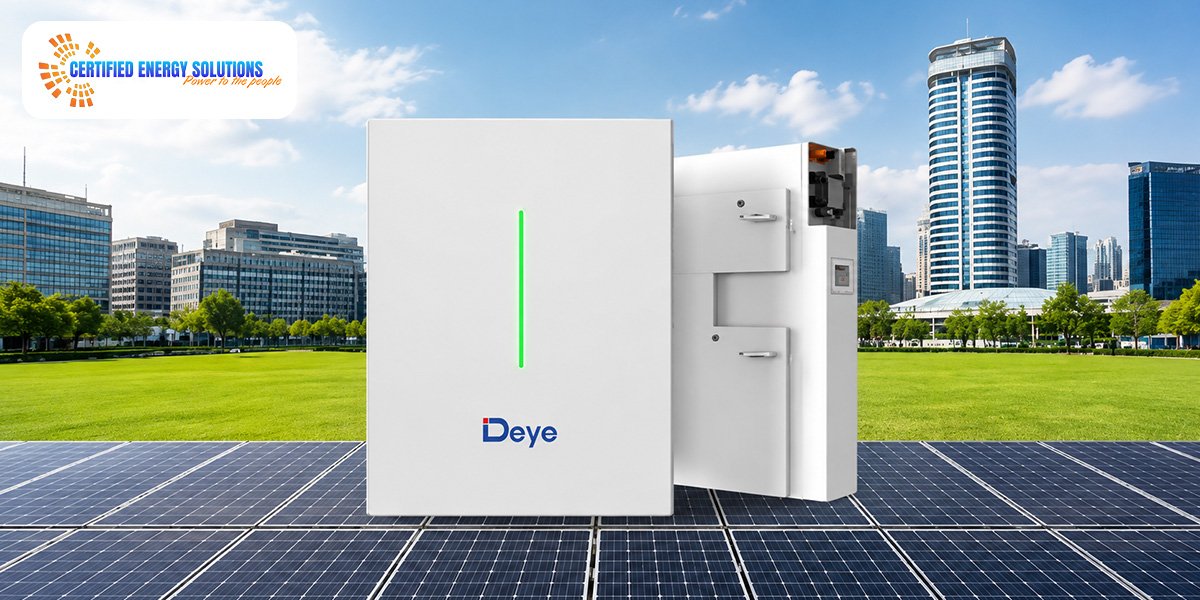
Thinking about adding a battery to your Queensland solar system? Whether you’re planning a standard upgrade or exploring solar energy solutions for regional Queensland, here’s a clear, fact-checked guide to what support actually exists right now. This includes how to claim the QLD solar battery rebate, what happened to the old $4,000 state program, and exactly how to claim the current federal discount.
Quick summary (what’s real in 2025)
Federal discount (active now): From 1 July 2025, the Australian Government’s Cheaper Home Batteries Program adds batteries to the Small-scale Renewable Energy Scheme (SRES). Eligible battery installs receive an up-front discount of around 30% via small-scale technology certificates (STCs) created from the battery’s usable capacity (capped at the first 50 kWh). The discount is typically applied on your invoice by your installer/retailer.
Queensland $3,000–$4,000 “Battery Booster” rebate (status): This state scheme ran through 2024, offering $3,000 to most eligible households and $4,000 for lower-income households. Official reporting confirms there is no active state-level Solar Battery Rebate Queensland 2025.
The only rebate you can actually claim today is the federal one!
How The Federal Battery Discount Works?
1) Check that your site and system are eligible
To receive the federal discount, your install must meet these basics:
- Install date: Battery systems must be installed on or after 1 July 2025. A system is considered “installed” on the date the electrical safety certificate (or state equivalent) is issued. Systems tested/certified before 1 July 2025 aren’t eligible.
- Battery size: 5 kWh to 100 kWh (nominal). STCs are calculated from the usable capacity, but only the first 50 kWh of usable capacity attracts certificates.
- One claim per premises: Only one battery at an address can receive support (you can’t claim again later for a second battery).
- PV required: The battery must be installed with an existing or new solar PV system (stand-alone grid-charging batteries aren’t eligible).
- Approved products & accreditation:
- Battery and inverter must be on the Clean Energy Council (CEC) approved lists.
- Installation must be done by a Solar Accreditation Australia (SAA) battery-accredited installer (or supervised on-site by one).
- VPP-capable hardware: For on-grid installs, the inverter must be technically capable of Virtual Power Plant (VPP) participation (you don’t have to join a VPP, but the system must be capable).
2) Understand the value (and why it shows as an invoice discount)
Under the SRES, batteries now generate STCs based on usable kWh (first 50 kWh). The Clean Energy Regulator (CER) states households and small businesses may be eligible for ~30% off up-front, with the Australian Government funding the purchase of these battery STCs so costs aren’t passed to retailers or consumers. In practice, your installer/retailer reduces your invoice and later creates the STCs.
3) Get compliant quotes (this affects your eligibility)
When seeking quotes, insist on:
- CEC-listed battery & inverter in the proposal.
- SAA-accredited designer/installer named on the quote.
- A statement that the system meets VPP-capable requirements (for on-grid).
- Confirmation your existing PV (if any) is compliant and on approved lists.
These items align the quote with the regulations and make the up-front discount seamless at payment time.
4) Install and receive the discount
Once installed and certified:
- The installer applies the discount on your bill (they create the STCs in the REC Registry under the new battery category).
- You should retain the electrical compliance certificate, product serial number photos, and signed assignment forms in case of audits. The CER has added battery-specific documentation and inspection processes.
What happened to the Queensland $4,000 rebate?
Queensland’s Battery Booster rebate (delivered via QRIDA) offered $3,000 for households earning up to $180,000 and $4,000 for households with the highest earner under $66,667, provided you had at least 5 kW of solar PV and installed a battery of 6 kWh or more. The program launched in early 2024, received additional funding in April 2024, and has since closed.
Official reporting by the Queensland Rural and Industry Development Authority (QRIDA) for 2024–25 lists the Battery Booster Rebate Scheme as “Closed”, with standard rebates “up to $3,000” and low-income rebates “up to $4,000.”
Bottom line for 2025: there’s no open Queensland battery rebate to apply for today. If the state announces a new round, it will likely mirror similar eligibility settings (PV size and income thresholds) but you should wait for official criteria. For historical reference only, the $4,000 tier was means-tested and required 6 kWh+ batteries and 5 kW+ PV.
Important Queensland Caveat: Legacy 44c Feed-In Customers
If you still receive Queensland’s legacy 44c/kWh Solar Bonus Scheme tariff (available until 1 July 2028), adding or operating a battery can jeopardise your eligibility unless you follow the specific rules (for example, only using alternative sources when the tariff system is not operating, or arranging separate connections). Always check with your distributor before proceeding.
Step-by-step: claiming support in 2025
A) Federal discount (what you can claim now)
Check eligibility: Confirm battery & inverter are CEC-listed, installer is SAA-accredited, your PV is compliant, and your site meets size thresholds (battery 5–100 kWh nominal, STCs on first 50 kWh usable, and PV present).
Request compliant quotes: Ask retailers to show the estimated federal discount on the quote and confirm they’ll apply it up-front at invoicing.
Install and certify: Ensure the certificate of electrical compliance is issued on/after 1 July 2025. Keep all documentation (photos, serials, forms).
Invoice with discount: The retailer applies the discount now and later creates the battery STCs in the REC Registry.
B) Queensland state rebate (what to do if it reopens)
Monitor official channels: New rounds would be announced on Queensland Government statements and delivered by QRIDA.
Prepare your paperwork: Based on the 2024 round, gather income evidence (for means-testing), a compliant quote, and proof of PV system size, so you can apply quickly if the portal opens. (Note: amounts/thresholds could change; always check the new guidelines.)
Compliance checklist for Queensland households in 2025
Products: On the CEC approved lists at the time of certification.
Installer: SAA battery accreditation (or supervised on-site).
Documentation: Electrical compliance certificate date ≥ 1 July 2025, installer/designer/retailer written statements, serial-number photos.
System capability: VPP-capable (on-grid).
One claim: Only one battery discount per premises.
Legacy 44c FIT: Confirm impacts with your distributor before adding a battery.
FAQs
Is there really a $4,000 Queensland battery rebate in 2025?
Not currently. The 2024 Battery Booster scheme (up to $4,000 for low-income households) is closed. Watch official channels for any new round.
So where does the big discount come from now?
The federal program active since 1 July 2025 delivers an up-front invoice reduction via battery STCs based on usable capacity (first 50 kWh). The Australian Government purchases these STCs, so the discount doesn’t flow through power bills.
Do I need to join a VPP?
No, VPP capability is required for on-grid installs, but joining a VPP is optional.
Can businesses claim too?
Yes, households and small businesses are eligible if they meet program rules.