
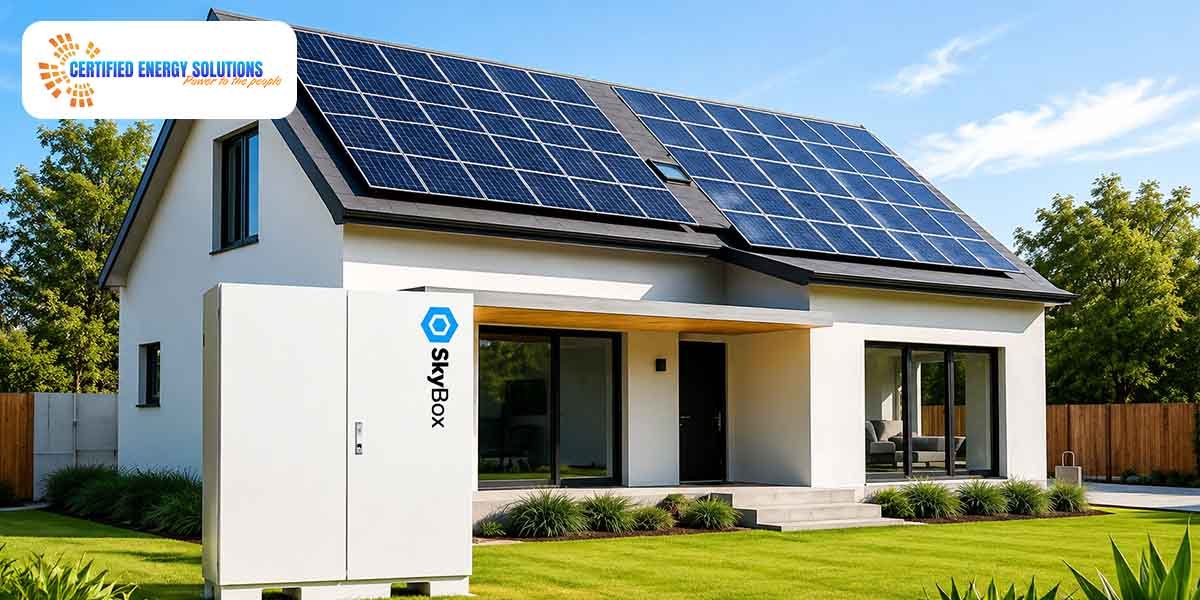
If you’re researching Sigenstor battery reviews Australia, it’s probably because you’re serious about cutting power bills and improving energy resilience. Australia is undergoing a rapid energy transition, and many homeowners are now prioritising grid independence with solar power especially those in storm-prone and rural regions.
Sigenstor’s “5-in-One” system combines a hybrid solar inverter, battery stack, gateway backup, EMS, and optional EV charging in a single ecosystem. That makes it one of the strongest contenders for households exploring the benefits of hybrid solar systems paired with solid backup capability.
So, is Sigenstor the best smart home battery for grid independence in Australia? Let’s break it down.
What is Sigenstor?
Sigenstor is a modular, all-in-one energy storage system. Unlike piecing together a separate inverter, battery, backup controller, and EV charger, Sigenstor integrates those components into a single ecosystem with one app and one warranty path. Sigenergy calls it a “5-in-One” Home ESS: solar inverter, EV DC charger (optional), battery power control system (PCS), battery pack, and EMS.
Key Specs At A Glance
- Scalable capacity: 1 – 6 battery modules per stack, enabling roughly 5 kWh to 48 kWh per stack (multiple stacks can be paralleled for larger homes). This lets households start smaller and add capacity later as needs grow.
- Inverter options: Single-phase 0 – 12.0 kW and three-phase 5.0 – 30.0 kW, with up to four MPPTs, handy for complex roof layouts.
- EV integration: Optional 25 kW bi-directional DC charger that bypasses the car’s onboard AC charger for much faster home charging and positions your EV for vehicle-to-home (V2H) use as standards mature.
- Chemistry & protection: LFP (LiFePO₄) cells and multi-layer protections. Third-party write-ups note long cycle life figures typical of LFP systems.
- Backup & gateway: Rapid switchover via the Sigen gateway for whole-home backup; installer tests report barely a light flicker during simulated outages.
On paper, this is a seriously capable platform especially for households that want a single vendor from roof to EV.
Everyday Performance & User Experience
A standout with Sigenstor is the mySigen app and EMS. Homeowners and installers routinely call out the app’s clear live views, scheduling, and intelligent control modes. Australian user reviews highlight smooth operation and an intuitive interface, which matters when you’re fine-tuning tariffs, solar forecasts, and EV charging windows.
For those chasing bill reduction, early Australian case studies report significant savings (one Perth homeowner cited ~70% bill reduction on a ~13 kWh system, depending on usage and tariff). Results vary, but with a right-sized battery and smart settings, Sigenstor’s EMS makes it easier to maximise solar self-consumption and to time-shift energy into evening peaks.
Build Quality & Australian Conditions
Australia is tough on hardware – heat, dust, salty air, and storms. Local reviews and product pages emphasise robust ingress protection (IP66 on outdoor-rated components) and broad operating temperature ranges suitable for most Australian climates. That translates to more mounting options and fewer derating surprises in summer.
From an installer perspective, reports point to quick commissioning (minutes) and stackable mechanical design, which cuts install time and makes future expansion straightforward. That’s not just a convenience; faster install can reduce labour costs and site disruption.
EV Charging That Actually Plays Nice With Solar
Where Sigenstor really separates itself is EV integration. Most wallbox chargers are AC and rely on your car’s onboard charger, typically topping out at 7-11 kW for many models. Sigenstor’s optional DC charger can deliver up to 25 kW at home, and because it sits inside the same ecosystem as your solar and battery, it opens the door to smarter charging from rooftop PV and off-peak tariffs and, in the future, bi-directional use so your EV can help power the home. (Availability of V2H features depends on vehicle support and local standards/regulations.)
If you don’t need DC, Sigenergy also offers an AC charger that still integrates cleanly with Sigenstor for solar-aware charging strategies.
Backup Power & Outage Resilience
For grid independence, fast and reliable backup is crucial. Installers report instant islanding via the Sigen gateway with near-seamless transfer – in practice, that means many appliances won’t even blink during a grid cut. With enough battery capacity (and PV available), homes can keep essentials or even the whole house running through extended outages. As ever, correct system sizing and a sensible backup circuit plan are key.
Pros And Cons
Pros
- True all-in-one: One vendor, one app, tightly integrated hardware (battery, inverter, EMS, backup, optional EV DC).
- Modular & scalable: 5-48 kWh per stack, multi-stack options for bigger homes or small businesses.
- EV ready: 25 kW DC charging at home with future-facing bi-directional capability.
- Good UX: Polished app and EMS features; positive homeowner feedback in Australia.
- Installer-friendly: Quick commissioning and clean stack design.
Cons
- Ecosystem lock-in: Integration is the strength, but it does encourage staying within the Sigenergy stack for add-ons.
- Newer brand: Compared with long-established names, some buyers may prefer lengthy track records; do lean on a local installer with solid support history.
- Real-world quirks: As with any complex system, some installers have documented teething issues and workarounds – good planning and post-install support matter.
Is Sigenstor “The Best” For Grid Independence?
For many Australian households, Sigenstor is one of the strongest all-rounders particularly if you want a single, smart platform that can grow with you. Its modular capacity, fast backup, and deep EV integration make it a front-runner for homes targeting high self-sufficiency today and V2H possibilities tomorrow.
That said, “best” depends on your roof, tariff, appliances, EV plans, and outage priorities. A household with modest loads and no EV might prioritise lowest $/kWh and simple backup. A larger home with three-phase loads, pool pumps, and an EV could benefit hugely from Sigenstor’s higher-power inverters and DC charging. The winning system is the one that’s correctly sized, properly installed, and tuned to your tariff and lifestyle.
How To Size It Right?
Audit your loads: Identify critical circuits for backup (fridge/freezer, lighting, communications, selected GPOs) and any high-draw appliances that may need special planning.
Match capacity to usage: Start with your evening/overnight consumption on a typical day; add headroom for seasonal changes. Modular stacks let you start at ~10-15 kWh and expand later.
Tariff strategy: Use the EMS to time-shift off-peak charging and maximise solar self-consumption. If you have an EV, plan charging windows around solar generation and tariffs.
Future-proofing: If V2H is on your radar, consider the DC charger as the anchor for bi-directional readiness.
The Bottom Line
Sigenstor delivers a polished, flexible pathway to higher grid independence with the convenience of a tightly integrated ecosystem. If you value smart control, fast backup, and EV-ready design in a modular package, it’s absolutely one of the top contenders in Australia right now.
Ready To Go Energy-Independent?
Certified Energy Solutions designs and installs best-in-class solar and battery systems tailored to Australian homes. We’ll help with system design, network approvals, rebates and incentives, tariff optimisation, and ongoing support, so your Sigenstor (or the right alternative) performs from day one. Talk to CertifiedEnergySolutions.com.au today to plan your smart, resilient home energy system.