For many Australian businesses, the challenge is not generating solar power. It is making the most of that energy when the property needs it.
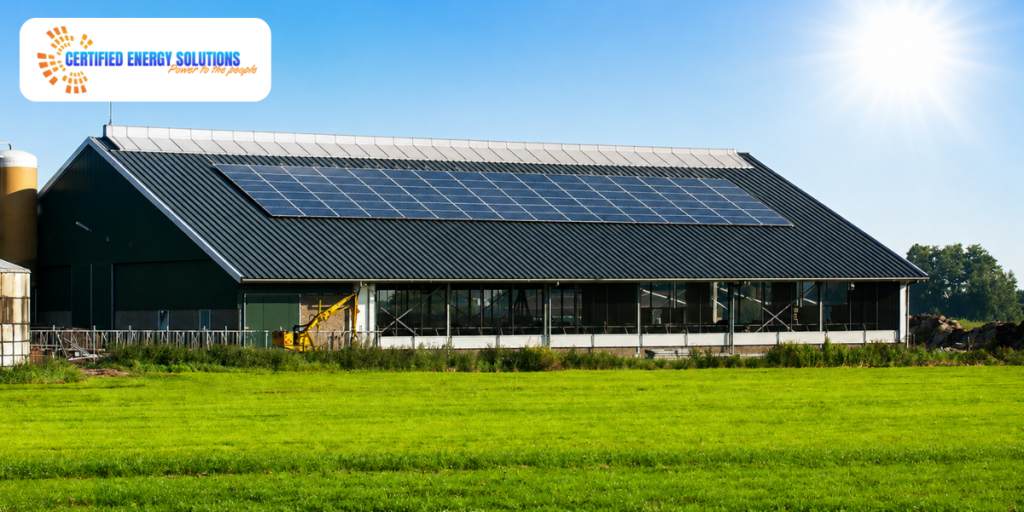
Solar panels generally produce their highest output around the middle of the day, but commercial electricity demand does not always follow the same pattern. Warehouses may run refrigeration and equipment throughout the afternoon. Manufacturing facilities can have machinery operating after solar production starts to decline, while offices and retail premises may continue using air conditioning, lighting and IT equipment.
When solar generation is higher than immediate demand, excess electricity is usually exported to the grid. Battery storage provides another option by keeping some of that energy on site for later use.
For a commercial project, the battery is only one part of the solution. Operating hours, electricity consumption, solar generation, existing infrastructure, available space and future plans all influence the system design.
Certified Energy Solutions provides consultation, engineering, installation and project management for commercial and industrial energy projects. CES is also a Sigenergy Platinum Partner and works directly with Sigenergy Australia.
What Are Commercial Energy Storage Systems?
Commercial energy storage systems store electricity so it can be used when required.
When a battery is connected to solar, the solar system first supplies the property’s active electrical loads. If generation exceeds demand, the surplus can charge the battery. When solar production falls, stored energy can then be discharged to help meet the site’s electricity needs.
The way this works will vary between properties. A warehouse, manufacturing facility, office or retail site can have very different electricity requirements. Refrigeration, machinery, air conditioning, EV charging and production schedules can all affect when energy is needed.
This is why interval electricity data is useful when assessing commercial storage. It shows not only how much electricity a site uses, but when that consumption occurs.
Why Consider a Commercial Battery Storage System?
Battery storage gives businesses greater control over when they use the solar energy they generate.
For example, a business operating until 7 pm may generate most of its solar energy around lunchtime but continue drawing significant power throughout the afternoon. Without storage, some daytime solar generation may be exported before grid consumption increases as solar output declines.
A commercial battery storage system can retain part of that daytime generation for later use.
Depending on the site, storage may help to:
- Increase on-site use of solar generation
- Store excess solar energy for later use
- Support afternoon and evening demand
- Provide backup power to selected critical loads
- Accommodate changing energy requirements
Interval data can also highlight peak demand periods, daytime consumption, solar generation and electricity exported to the grid. This provides a more useful starting point for system design than annual electricity consumption alone.
How Does Commercial Battery Storage Work With Solar?
A commercial battery storage system can be included in a new solar project or added to an existing installation, provided the site’s electrical infrastructure is suitable.
During the day, solar generation supplies the property’s electrical loads. If production exceeds those loads, the surplus can charge the battery rather than being exported immediately.
As solar output declines, the stored energy can be discharged to help meet demand.
This arrangement can be particularly useful for businesses that continue operating after the strongest period of solar production.
Battery storage can also form part of a backup power system. The equipment that needs to remain operational during an outage will vary by business.
A food business may prioritise refrigeration. A manufacturer may need selected machinery to remain operational, while an office may focus on servers, communications, security or other critical IT equipment.
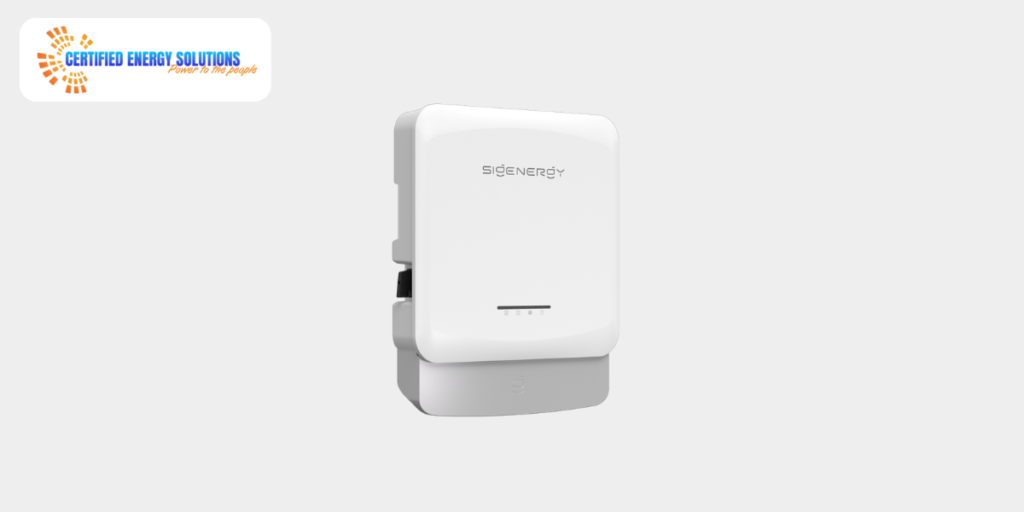
CES offers the Sigen Energy Gateway, which works with SigenStor to provide energy management, monitoring and backup power. In suitable configurations, the Gateway detects a grid outage and transitions the system to backup operation.
How Should Businesses Assess Their Storage Requirements?
Choosing a commercial battery is not simply about selecting the largest available capacity. The system should reflect how the property generates and consumes electricity.
Review Electricity Consumption
Start by looking at how the site uses electricity throughout a normal operating day.
Interval data can identify when demand rises, which loads remain active during the afternoon and how consumption changes outside normal trading hours. A business operating from 7 am to 3 pm will have a very different profile from one that remains open until 10 pm.
Manufacturing schedules, refrigeration, air conditioning and other large loads can also influence the site’s electricity use.
Check Solar Generation and Exports
For a property that already has solar, generation and export data should be reviewed alongside electricity consumption.
Regular daytime exports indicate that the solar system is producing more electricity than the site is using at those times. Depending on the system design and available capacity, a battery may be able to capture some of that surplus for later use.
Where solar and storage are planned together, the two can be designed as one integrated system rather than adding storage after the solar installation has been finalised.
Identify Critical Loads
Backup requirements need to be considered separately.
Not every electrical load needs to operate during a grid outage. Identifying the equipment that matters most allows the backup system to be designed around those priorities.
CES’s Sigen Energy Gateway works with SigenStor to support energy management, monitoring and backup power. In suitable configurations, it can detect a grid outage and transition the system to backup operation.
Think About Future Demand
Energy requirements can change as a business grows.
New machinery, EV charging infrastructure, longer operating hours, additional floor space or expansion plans can all increase electricity demand. Discussing these changes before the storage system is designed can help create a more suitable solution.
A modular approach may also provide greater flexibility where future capacity requirements are expected to change.
Sigenergy Batteries for Commercial Applications
CES offers Sigenergy batteries and commercial energy storage solutions for different project requirements.
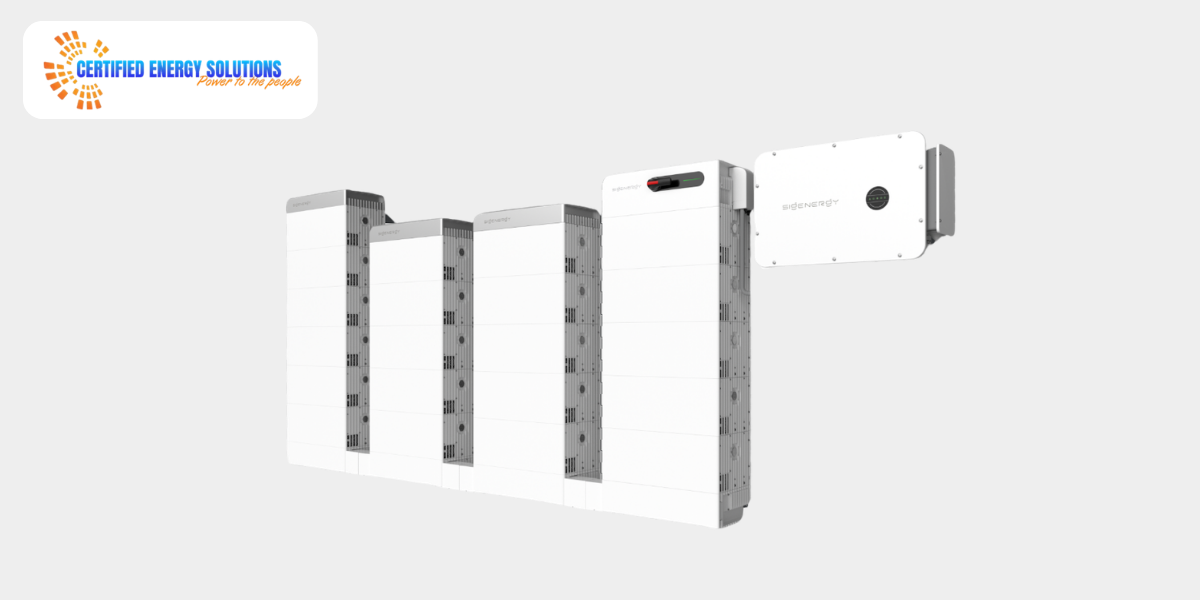
For larger applications, SigenStack is a modular battery energy storage solution built around stackable 12 kWh battery modules. This allows storage capacity to be configured around the project rather than relying on one fixed battery size.
CES also offers SigenStor, Sigenergy’s modular energy storage platform. Multiple units can be connected in parallel where greater capacity is required.
The final configuration will depend on energy demand, project size, available installation space, electrical infrastructure and the intended application.
What Makes SigenStack Different?
SigenStack uses a modular design with a DC-coupled architecture.
Each battery module provides 12 kWh of storage, and modules can be stacked to create a configuration suited to the project’s requirements and available space.
SigenStack also incorporates six layers of pack-level protection, including:
- Smoke sensing
- Temperature detection
- Insulation and heat isolation
- Decompression valve
- Fire extinguishing kit
These features are part of the battery design, while the complete installation still needs to account for the site’s space, electrical infrastructure, power requirements and operating conditions.
Is Battery Storage Right for Your Business?
The answer depends on how the property uses energy.
A business with regular daytime solar exports may have an opportunity to shift some of that generation into the afternoon or evening. Another business may be more concerned with keeping critical equipment running during a grid outage.
Future plans should also be part of the assessment. EV charging, new machinery, longer trading hours or expansion can significantly change a property’s electricity profile.
Before assessing a storage solution, it is useful to have:
- Current electricity consumption data
- Peak demand periods
- Solar generation and export data
- A list of critical loads requiring backup
- Available installation space
- Existing electrical infrastructure
- Planned changes to energy demand
With this information, an energy specialist can assess how battery storage could fit within the site’s wider electrical system.
Final Thoughts
Commercial battery storage works best when it is planned around the way a business actually operates. Solar generation, electricity demand and backup requirements can vary considerably from one site to another, so the system needs to match the property’s priorities.
Modular solutions such as SigenStack and SigenStor can provide flexibility for businesses whose energy requirements may change over time.
Talk to Certified Energy Solutions
Certified Energy Solutions can review your site’s energy data, electrical infrastructure and future requirements to help determine whether commercial battery storage is right for your business.
Contact CES to arrange an obligation-free consultation and discuss a commercial energy storage solution for your site.
Frequently Asked Questions
What Are Commercial Energy Storage Systems Used For?
They store electricity for use at a later time. For businesses with solar, this can include storing excess daytime generation and using it when solar production falls. A suitably designed system can also provide backup power for selected loads during a grid outage.
Can a Commercial Battery Storage System Work With Solar?
Yes. Excess solar generation can charge the battery when production is higher than the property’s immediate demand. The stored energy can then be used later when the business needs it.
What Are Sigenergy Batteries?
Sigenergy develops modular energy products for residential and commercial applications. CES offers solutions including SigenStack and SigenStor, along with associated energy management and backup products.
What Is SigenStack?
SigenStack is a modular battery energy storage solution for commercial applications. It uses stackable 12 kWh battery modules, allowing capacity to be configured around project requirements and available installation space.
Can Commercial Batteries Provide Backup Power?
Yes, when the system has been designed and configured for backup operation.
CES’s Sigen Energy Gateway works with SigenStor to support backup power, energy management and monitoring during grid outages. The loads that remain operational depend on the system configuration and the property’s electrical requirements.
How Do I Know What Size Commercial Battery I Need?
Battery size should be based on the property’s actual energy profile. Electricity consumption, peak demand, solar generation, operating hours and critical backup loads should all be considered, along with planned changes such as EV charging, new machinery or expansion.