The way your household uses electricity can change significantly over time.
You might start working from home, buy an electric vehicle, add a pool or find yourself using the air conditioning more often. In Queensland, these changes can make a noticeable difference to your electricity use, particularly through summer.
When you use electricity matters too. Solar panels produce most of their power during daylight hours, while many homes need more electricity later in the afternoon and evening.
A hybrid solar system combines solar panels with battery storage, allowing suitable excess solar energy to be stored and used later.
For homeowners, a hybrid system can provide more flexibility in how and when they use their solar energy.
When Solar Production and Electricity Use Do Not Line Up
Solar panels can produce plenty of electricity around lunchtime, yet the house may be empty.
By late afternoon, the situation changes. Everyone is home, dinner is being prepared, appliances are running and the air conditioner may be switched on.
At the same time, solar production is starting to fall.
Battery storage provides a way to keep suitable excess generation available for those later periods of higher demand.
This can be especially useful during Queensland’s warmer months, when cooling demand often continues into the evening.
Your Electricity Use Can Change After Solar Installation
The household that installed solar several years ago may now use electricity quite differently.
A spare room could have become a home office. New appliances may have been added, or you may simply spend more time at home than you did when the system was installed.
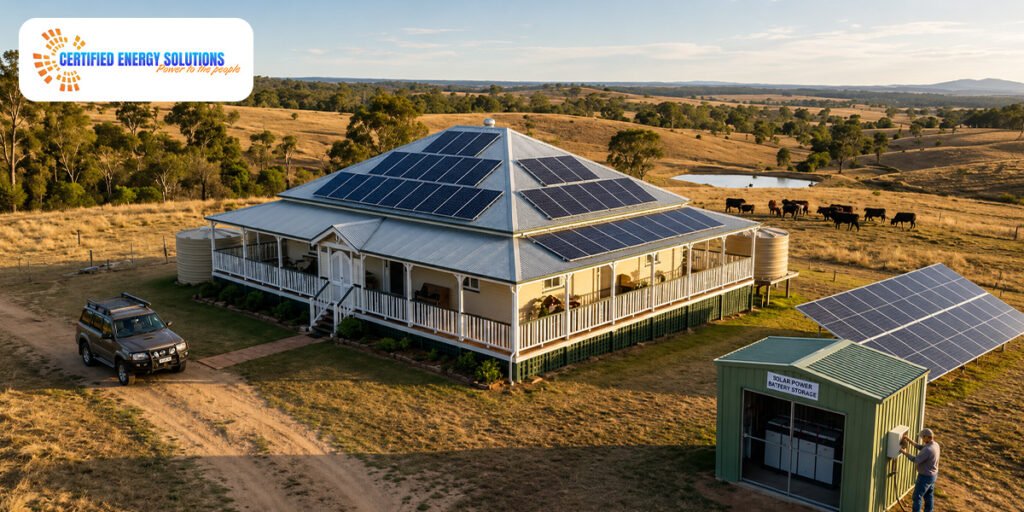
Rural properties can have quite different requirements. Pumps, sheds, workshops and farm equipment may all contribute to electricity demand, while an off-grid property needs to carefully manage the energy available.
These changes do not automatically mean your solar system needs replacing. Looking at how the property uses electricity today can show whether the existing panels and inverter are still suitable or whether battery storage or monitoring would be a better fit.
Battery Storage for Day-to-Night Energy Use
Battery storage can be useful for homeowners who want to make greater use of their solar energy. Choosing the right battery also means considering when the property uses electricity, not just how much the panels generate.
Solar array size, inverter capacity, electricity consumption and available installation space all need to be considered. Any planned additions, such as an EV charger or other high-demand equipment, are worth discussing as well.
Certified Energy Solutions works with homeowners who want to add battery storage to existing solar installations, as well as customers starting with a new solar and battery system.
The aim is to choose storage that suits how the property actually uses energy rather than simply selecting the largest battery available.
Know What Your Solar System Is Doing
A power bill tells you how much electricity you used over a billing period. It does not tell you when your solar system produced the most power or when your home used the most.
Solar system monitoring solutions give you a closer look at that information.
Depending on the equipment, you may be able to see:
- Solar generation
- Household electricity use
- Battery charging and discharging
- Daily production patterns
- System performance
- Smart-device or generator activity where supported
This information can help you identify when your property is producing and using the most electricity. If the data shows strong daytime generation alongside higher evening consumption, you can assess whether battery storage would suit your usage pattern.
Certified Energy Solutions offers monitoring options for solar and battery systems, with selected setups supporting smart-device and generator integration.
This can be especially useful on larger rural or off-grid properties where several energy sources or electrical loads are involved. Monitoring can also help when planning for an EV or another major electrical load.
Adding an EV to Your Home
An EV adds another regular electricity demand at home, but the effect will depend on how far you drive, how often you charge and when the vehicle is usually parked at home.
If you are home during the day, available solar generation may contribute towards charging. If you normally plug in overnight, charging could instead draw from battery storage or the grid.
Before choosing an EV charger, think about:
- How far you normally drive
- When you usually charge
- When the vehicle is parked at home
- Your solar production
- Battery storage
- Other major electrical loads
Certified Energy Solutions offers AC EV charging and bidirectional charging options, including Sigenergy solutions.
Planning the charger alongside the rest of your energy setup means the EV can be integrated from the start.
Why Custom Solar Systems for Homes Are Worth Considering
Not every Queensland property uses electricity in the same way.
A coastal family home might have high summer cooling and pool loads. An acreage property could have water pumps, sheds and workshop equipment. A farm may use significant power during the day, while an off-grid property needs to manage its available energy carefully.
Custom solar systems for homes can be designed around these differences.
The design may take into account:
- Electricity use
- Roof and property characteristics
- Existing equipment
- Battery requirements
- EV charging
- Pumps, pools or workshop equipment
- Backup needs
- Budget
Certified Energy Solutions works with homes, farms, businesses and off-grid properties across regional and coastal Queensland.
The team can assess how the property operates and recommend a setup suited to its electricity needs.
Before You Upgrade Your Solar System
Before deciding what to add, start with what you already know about the property.
1. Look at Your Recent Bills
Check whether your electricity use has increased and whether your bills show a noticeable change over time. If your system has monitoring, look at when you are using the most power.
2. Review Your Existing Equipment
Your solar panels, inverter and current system configuration will affect which upgrades are suitable.
3. Consider Any New Loads
Think about anything that has recently been added to the property, such as:
- An EV charger
- Additional air conditioning
- Workshop equipment
- Water pumps
4. Talk About What Is Coming Next
Planning a renovation, buying an EV or making changes to an acreage property? Mention those plans when discussing your options.
That way, the proposed system is based on more than just today’s electricity bill.
Can solar and battery systems work with a generator?
Some hybrid and off-grid systems can integrate with backup generators. The available configuration depends on the equipment selected.
Final Thoughts
A solar system should suit the property it is installed on and the way you use electricity.
If things have changed since your original installation, looking at how the system is performing can help you decide whether an upgrade is needed.
Certified Energy Solutions provides solar, battery, EV charging, monitoring and off-grid solutions across regional and coastal Queensland.
Thinking About Your Solar Upgrade?
Contact Certified Energy Solutions to discuss your property’s electricity use and explore solar, battery or EV options suited to your needs.
Frequently Asked Questions
What are the benefits of hybrid solar systems?
Hybrid solar systems combine solar panels with battery storage. Excess solar generated during the day can be stored and used later, giving homeowners more flexibility over their electricity.
Can I add a battery to my existing solar system?
Some existing solar systems can accommodate battery storage, but the panels, inverter and system configuration need to be checked before selecting equipment.
What do solar system monitoring solutions show?
Depending on the equipment, monitoring can show solar generation, household electricity use, battery activity and system performance. Some setups can also support smart devices or generators.
Do I need a larger battery if I buy an electric vehicle?
Not necessarily. The right battery size depends on your driving habits, charging schedule, solar production, existing storage and other electricity loads.
Why choose custom solar systems for homes?
A customised design can account for the property’s electricity use, existing equipment, EV charging, battery needs and other requirements.