Your solar panels may generate more electricity than your home needs around midday, while demand can rise in the evening when cooking, lighting and air conditioning are in use. Tracking these patterns can show when your home uses solar electricity and when it needs power from the grid.
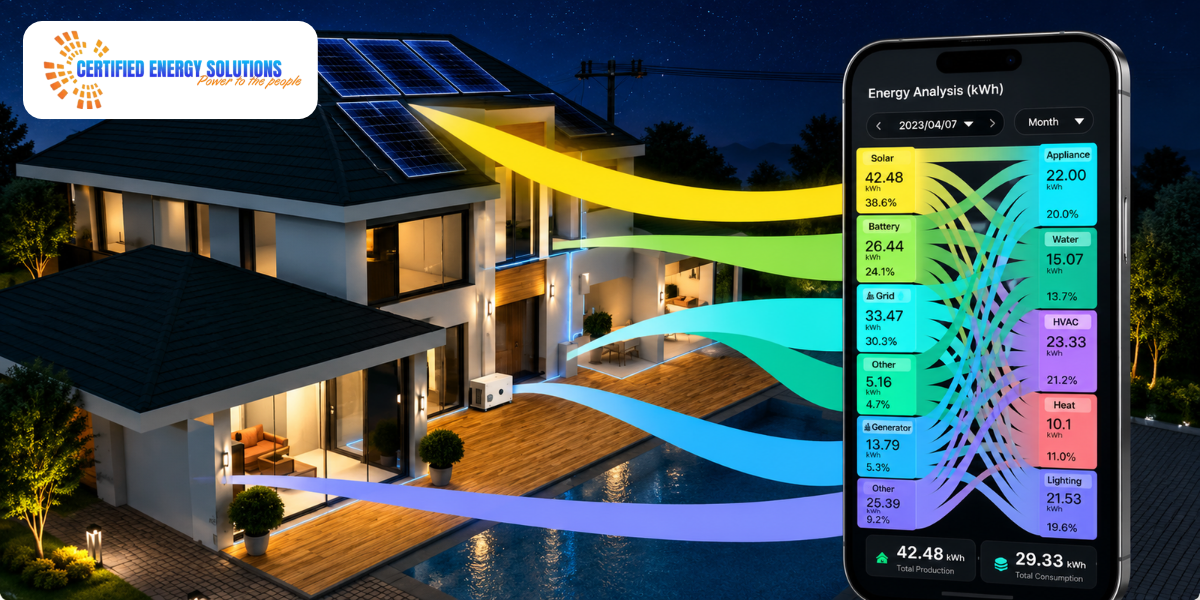
The mySigen app provides access to energy information from compatible Sigenergy systems. Depending on your installation, you may be able to check solar generation, household consumption, battery activity and the movement of electricity between your home and the grid.
What Can You See in the mySigen App?
The information and controls available in the mySigen app depend on your equipment and system configuration. Features may include:
- Solar generation: View how much electricity your panels produce.
- Household consumption: Check how much electricity your home uses.
- Energy flows: See how electricity moves between your solar panels, home, battery and the grid.
- Battery status: Check the available battery charge level and charging activity.
- System controls: Access the settings and energy management features supported by your installation.
Certified Energy Solutions can explain the mySigen app features available with your proposed system, including Sigen AI Mode and its AI-powered assistant, where supported.
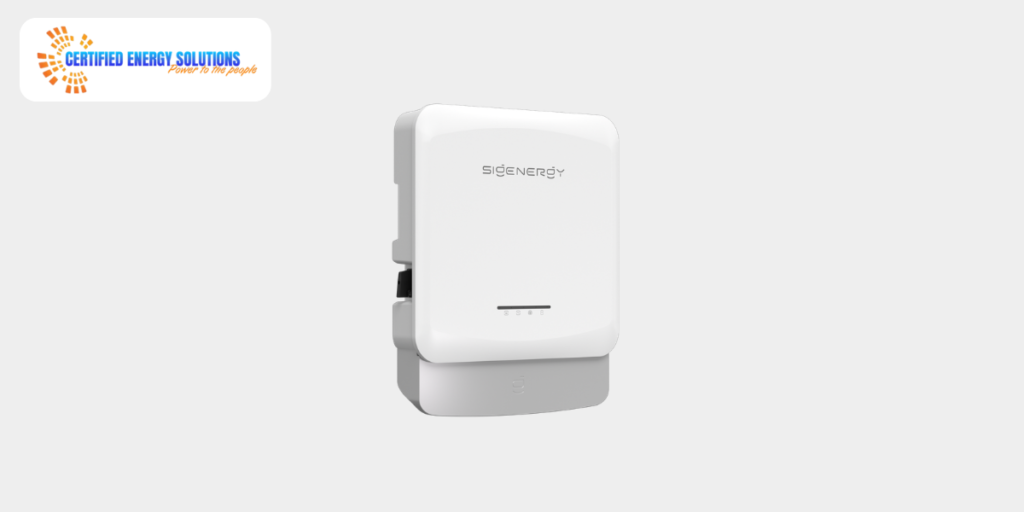
To help monitor how electricity moves through your property, compatible Sigenergy systems can also use a Sigen Power Sensor.
What Does the Sigen Power Sensor Do?
The Sigen Power Sensor measures electrical power in compatible Sigenergy installations.
Before purchasing, check the model requirements and confirm that the sensor is compatible with your system.
1% Power Detection Accuracy
According to the manufacturer’s specifications, the Sigen Power Sensor has a power measurement accuracy of 1%. This helps the system monitor electrical power, but it does not guarantee lower electricity bills. Actual costs depend on household demand, solar generation, battery operation and electricity tariffs.
Compact 1P Design
The sensor has a compact 1P design and a plug-in format. Whether it suits your switchboard depends on the installation requirements and existing equipment.
Ask your installer whether the sensor’s dimensions and connection requirements suit your switchboard. Electrical installation and configuration should be handled by a suitably qualified professional.
Compatibility with Sigenergy Equipment
The Sigen Power Sensor integrates with compatible Sigenergy devices. For existing systems, compatibility will depend on the equipment already installed and the sensor model selected.
Wireless Communication and Range
When used with the Sigen Sensor Sub1G Kit, the sensor supports Wi-Fi HaLow communication, with a stated transmission range of up to 200 metres in open spaces.
The 200-metre range applies to open spaces and may be shorter inside a home. Walls and other obstacles can weaken the signal. Your installer can check whether the communication setup will work for your property.
How the mySigen App and Sigen Power Sensor Work Together
The Sigen Power Sensor measures electrical power, while the mySigen app displays energy information from a compatible Sigenergy system. The readings can help show how solar generation, household demand and battery operation relate to one another.
For example, this information may help explain why a home imports electricity at certain times, even when its solar panels are generating power.
Four Ways Energy Monitoring Can Help at Home
1. Identify Periods of High Electricity Use
Air conditioning, pool pumps and electric vehicle charging can all increase electricity demand. If your energy data shows a consistent peak, consider whether shifting flexible activities to another time would suit your household.
Compare your electricity use on days when the pool pump runs at different times. This can help you judge whether changing its schedule is worthwhile, while still following the manufacturer’s operating instructions.
2. Make Better Use of Daytime Solar Production
Where practical, run appliances such as washing machines and dishwashers during periods of strong solar generation. This can allow you to use more of the electricity your panels produce instead of exporting it to the grid.
Solar output changes with the weather, season and shading. You do not need to schedule every appliance around sunshine; start with flexible activities that fit comfortably into your household routine.
3. Understand Battery Performance
Battery readings can show when the battery is charging or supplying power, depending on the features supported by your installation.
If the charging pattern differs from what you expect, ask your installer to review the system settings and operation. Avoid changing technical settings without understanding their effect on the battery and the wider system.
Comparing battery activity across different days can help you understand how changes in solar generation and household demand affect battery use.
4. Assess Your Electricity Tariff
Your electricity plan determines how much you pay for power drawn from the grid and how much you receive for excess solar energy exported to the grid. Compare your peak and off-peak electricity rates with your solar feed-in tariff to see whether your plan suits your household’s energy use.
Look at your actual bills, including daily supply charges and any applicable time-based rates. A plan with a higher feed-in tariff is not necessarily cheaper overall if its import rates or other charges are less favourable for your household.
Making Sense of Your Energy Readings
Compare readings across different days to understand how weather and household activities affect your electricity use. If you notice an unexpected change, your installer may be able to help investigate it.
Using Energy Insights to Plan Your Solar and Battery System
Understanding when your household uses electricity can help you make informed decisions when considering a solar and battery system. Reviewing your daytime consumption, evening demand and periods of high electricity use can help you identify your energy requirements.
Certified Energy Solutions can use this information, alongside your property’s requirements and budget, to help you explore suitable solar, battery and monitoring options.
Final Thoughts
Considering a Sigenergy solar and battery system? Contact Certified Energy Solutions to discuss a suitable solution for your property.
Frequently Asked Questions
Is the Sigen Power Sensor compatible with every Sigenergy system?
No. Compatibility depends on the sensor model and the Sigenergy equipment installed at your property.
Can energy monitoring reduce electricity bills?
Monitoring can help you identify opportunities to use more solar electricity and review your energy plan. Actual savings depend on your household’s energy use, system performance and electricity rates.
Do I need a battery to monitor solar energy use?
Not necessarily. Some solar systems provide generation and consumption information without a battery, while battery-specific information requires compatible battery equipment.
Why does my home still import electricity when the solar panels are generating power?
Your home may need more electricity than the panels are producing at that moment. Cloud cover, time of day, appliance demand and system configuration can all affect the balance. A compatible battery may supply stored energy when solar generation is lower, depending on its charge level and operating settings.