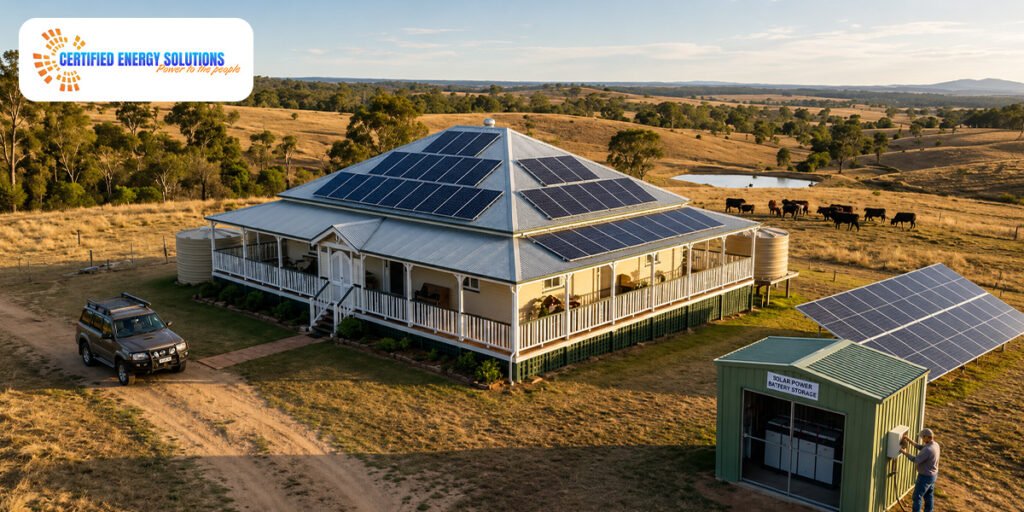
Living off-grid means your property needs to generate and store its own electricity. Without a reliable connection to the electricity network, your solar system and battery need to keep essential appliances and equipment running during the day, overnight and through periods of poor weather.
For Queensland homes, farms and rural properties where connecting to the grid isn’t practical, off-grid solar with battery storage can provide a reliable way to generate electricity during daylight hours and use stored energy after the sun goes down.
The best setup depends on how your property uses power. A rural home with a bore pump, workshop and air conditioning can have very different requirements from a smaller household with standard appliances.
Certified Energy Solutions is based in Gympie and works with homes, farms, businesses and remote properties across regional and coastal Queensland.
Start With How Your Property Uses Electricity
Before deciding how much solar or battery storage you need, look at the equipment you rely on and when it normally operates.
Rural properties can have electrical loads that aren’t common in suburban homes, including:
- Bore and pressure pumps
- Refrigerators and freezers
- Electric hot water systems
- Air conditioning
- Workshop equipment
- Compressors and other machinery
When those loads run is just as important as how much power they use. Solar panels produce electricity during daylight hours, while evening and overnight consumption needs to be supplied by stored battery energy or another backup source.
It’s also worth considering what you may add in the future. If you’re planning a workshop, another pump or additional electrical equipment, mention it during the design process. Knowing about those plans early can help avoid limitations later.
Choosing the Right Battery Size
There isn’t a single battery size that suits every off-grid property.
Your daily electricity consumption is an important starting point, but the timing of that consumption matters too. A household that uses a lot of power after sunset will generally need more stored energy than one that uses most of its electricity during the day.
Solar availability also needs to be considered because the battery relies on solar generation to recharge.
When comparing batteries, pay attention to usable battery capacity, rather than looking only at the advertised capacity. The headline figure doesn’t always represent how much energy you can actually use.
Ask your installer to explain the usable capacity of the proposed battery and how it compares with your typical overnight consumption. That gives you a clearer picture of whether the storage is suitable for the property.
Make Sure the Inverter Can Handle Your Equipment
Battery capacity is only one part of an off-grid system. The inverter also needs to cope with the equipment running on the property.
Some appliances and machinery draw considerably more power when they start than they do during normal operation. Pumps, compressors, refrigerators and workshop equipment can all have significant starting loads.
For example, a pump might have a relatively modest running load but require a much larger burst of power when its motor starts. If the inverter can’t handle that demand, having plenty of energy stored in the battery won’t solve the problem.
For this reason, the solar panels, battery and inverter should be designed as one system rather than selected independently.
Using Stored Energy After Sunset
Once solar production stops, the battery supplies stored electricity to the property.
Depending on the household and its priorities, this may include:
- Refrigeration
- Lighting
- Internet and communications
- Security systems
- Fans and air conditioning
- Water pumps
- Other essential appliances
How long the battery lasts depends on its usable capacity and how much electricity the property is using.
A property running air conditioning, refrigeration and other equipment throughout the evening will use stored energy faster than one with only a few essential overnight loads.
That is why actual electricity consumption is more useful when planning an off-grid system than choosing a battery based simply on the size of the house.
Preparing for Cloudy Weather
Queensland has plenty of sunshine, but solar generation still varies with the weather. Several cloudy or rainy days can reduce production and make it harder for the battery to recharge.
For some properties, this may not be a major concern. For others, particularly those with high electricity demand or equipment that needs to remain operational, additional backup can provide greater peace of mind.
Do You Need a Generator?
Not every off-grid property needs a generator.
Some properties can operate effectively using solar and batteries alone. A generator may be useful where there are high electrical loads, critical equipment or a greater need for backup during extended periods of limited solar production.
Certified Energy Solutions supplies Westinghouse and Kubota generators for off-grid applications and can integrate suitable generator options into an off-grid setup.
Whether a generator makes sense will depend on the property’s electricity demand, the equipment that needs to stay operational and the level of backup you want available.
Leave Room for Future Changes
Your electricity use may not stay the same after installation.
You might add air conditioning, build a workshop, install another pump or start using equipment that wasn’t part of the original plan. If you already know about these changes, tell your installer before the system is designed.
Certified Energy Solutions offers SkyBox packages with expandable battery capacity, monitoring and different inverter configurations. These options can provide flexibility for customers whose electricity needs may increase over time.
When comparing systems, ask what can be expanded later and whether there are limits on adding further battery storage or equipment.
What to Check When Comparing Quotes
Price matters, but it shouldn’t be the only factor when comparing off-grid solar quotes.
Two systems can look similar on paper while offering different batteries, inverters, monitoring, backup equipment and levels of technical support. Installation and commissioning can also vary between quotes.
Before comparing the final price, check whether the quote includes:
- Solar panels and associated equipment
- Battery capacity and usable capacity
- Inverter model and output
- Monitoring
- Electrical work
- Mounting and installation
- Generator integration, if required
- Commissioning
- Warranty coverage
- Future expansion options
- Technical support
For a remote property, after-sales support is particularly important. Ask how servicing is handled and who you can contact if something goes wrong after installation.
Certified Energy Solutions provides custom solar and battery solutions for homes, farms, businesses and remote properties across regional and coastal Queensland.
Choosing an Off-Grid Solar Installer in QLD
The lowest quote isn’t necessarily the most suitable choice for a rural or remote property.
Look for an installer that takes the time to understand the property and can explain why particular equipment has been recommended.
Before signing a contract, consider asking:
- Why has this battery capacity been recommended?
- How much usable energy will the battery provide?
- Can the inverter handle the largest starting loads on the property?
- How will the system cope with several days of low solar production?
- Can the system be expanded if electricity use increases?
- What support is available after installation?
The site itself should also be assessed. Solar exposure, existing electrical infrastructure, equipment locations, access and major electrical loads can all affect the final design.
Certified Energy Solutions provides consultations and solar and battery design for rural and off-grid properties throughout Queensland.
Solar Battery Rebate Queensland 2026
If you’re researching the solar battery rebate Queensland 2026, check the current government requirements rather than relying on older rebate information.
The Australian Government’s Cheaper Home Batteries Program provides support for eligible small-scale battery systems through the Small-scale Renewable Energy Scheme. Changes to the programme took effect on 1 May 2026.
Off-grid properties can qualify, although specific conditions apply.
The Clean Energy Regulator states that an eligible off-grid battery must be installed at a lived-in dwelling, such as a remote farmhouse. Batteries installed for non-lived-in structures, such as sheds, or for standalone bore pumps, aren’t eligible.
Distance from the electricity grid can also affect the requirements. Properties more than 1 km from the grid don’t need the battery to be VPP-capable, while additional conditions apply to eligible off-grid properties within 1 km of the grid.
The battery and installation must also meet the relevant product, capacity, standards and installer requirements.
Before signing a contract, ask:
- Is the proposed battery eligible?
- Does the property meet the off-grid requirements?
- How has the current STC calculation affected the quoted price?
- Is the expected discount included?
- Who will handle the required paperwork?
A rebate can help reduce the upfront cost, but it shouldn’t be the main reason for choosing a particular battery. The system still needs to be suitable for the property and its electricity demands.
Is Off-Grid Solar Right for Your Property?
Going off-grid can make sense when there is no practical grid connection or extending the network would involve substantial infrastructure costs.
If your property already has an affordable and reliable grid connection, staying connected may be the more practical option.
Before making a decision, consider:
- Current electricity consumption
- Grid connection costs
- Solar potential
- Battery requirements
- Backup power
- Future electricity use
- Equipment and installation costs
- Long-term servicing and support
For a rural Queensland property, a proper site assessment is a better starting point than choosing a package from a price list. The final design should reflect the property, the equipment you rely on and how you expect your electricity use to change.
Frequently Asked Questions
Can Battery Storage Power a Home Overnight?
Yes. Electricity generated by solar panels during the day can be stored in the battery and used after sunset. How long it lasts depends on the battery’s usable capacity and the property’s overnight electricity consumption.
Does Every Off-Grid Property Need a Generator?
No. Some properties can operate with solar and batteries alone. Others may benefit from generator backup because they have high electricity demand, critical equipment or extended periods of limited solar production.
Can Batteries Be Added to an Existing Off-Grid Solar System?
Sometimes. The existing panels, inverter, switchboard and other electrical equipment need to be assessed first. Whether additional storage can be installed will depend on the equipment already in place and its compatibility with the proposed battery system.
Is There a Battery Rebate in Queensland in 2026?
Eligible off-grid battery systems can receive support through the Australian Government’s Cheaper Home Batteries Program, provided the installation meets the current requirements.
Specific conditions apply to the dwelling and its distance from the electricity grid, so check the latest requirements before signing a contract.
What Should I Look for in an Off-Grid Solar Installer?
Look beyond the price. The installer should assess the property, understand how electricity is being used, explain the recommended equipment and provide clear information about warranties and ongoing support.
For rural properties, experience with off-grid installations is particularly useful because the system may need to account for equipment, site conditions and electrical loads that aren’t present in a typical grid-connected home.
Final Thoughts
Choosing an off-grid solar system starts with understanding how your property uses electricity.
Think about what runs during the day and overnight, including pumps, refrigeration, air conditioning, workshop equipment and other high-demand appliances. From there, your installer can determine the appropriate combination of solar generation, battery storage, inverter capacity and backup power.
For Queensland homeowners, farmers and rural property owners, off-grid solar with battery storage can be a practical option when a grid connection isn’t suitable.
The right system isn’t necessarily the one with the biggest battery or the lowest quote. It should provide enough usable energy for the property, handle the equipment you depend on and allow for sensible changes as your needs evolve.
Talk to Certified Energy Solutions
Certified Energy Solutions is based in Gympie and works with homes, farms, businesses and remote properties across regional and coastal Queensland.
The company provides custom solar and battery solutions, including expandable SkyBox battery packages, monitoring and backup generation.
If you’re considering going off-grid, discuss your current electricity use, the equipment you rely on and any future plans with the team before choosing a system.